Service Overview
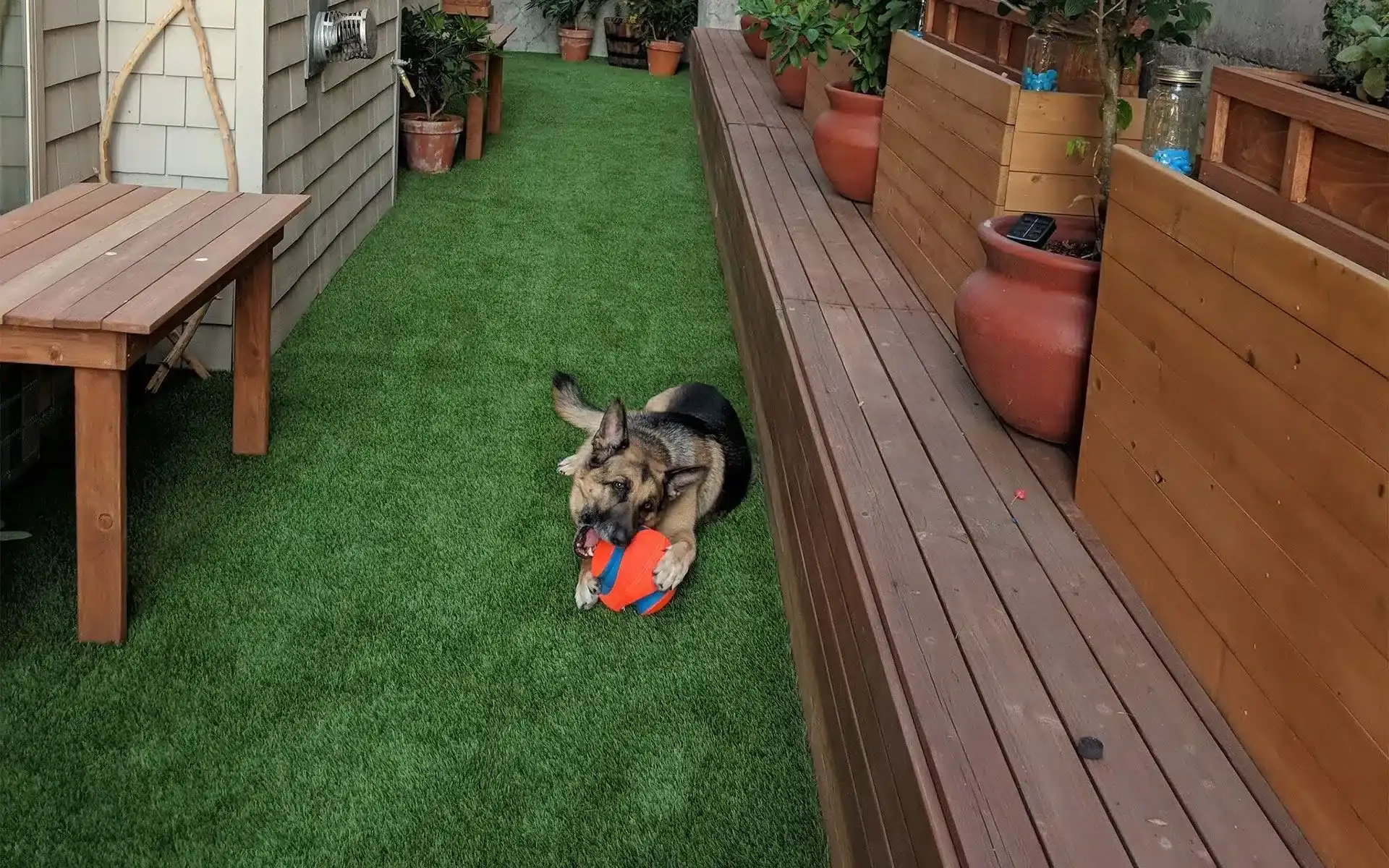
Pet area turf in Humble and Atascocita operates under conditions that standard residential turf installations are not designed to handle. A dog run or dedicated pet zone concentrates animal activity, waste, and foot traffic into a limited area that may see more daily use intensity than any other part of the yard. The drainage requirements for a pet area are not just higher than a standard lawn—they are a fundamentally different design challenge that requires specific backing systems, infill types, and base preparation approaches.
Flight crew households in neighborhoods like Eagle Springs, Summerwood, Fall Creek, and the Atascocita Forest corridor commonly have pets that spend significant time in the yard precisely because the household adults are away on rotation for days at a time. The person at home during those periods—a spouse, family member, or dog walker—needs a yard surface that is functional, clean, and easy to maintain without specialized knowledge or equipment. Pet turf installed with correct drainage and surface specifications allows for a simple rinse-and-ready daily routine rather than the mud management, odor control, and surface damage cycle that natural grass produces under the same use.
We spec pet area turf projects around three primary requirements: drainage rate, sanitation, and durability. Drainage rate is the most technically demanding of the three. A pet area that sees multiple dogs over eight to ten hours per day needs a backing system capable of moving liquid through the surface and into the base at a rate that prevents pooling. Standard residential turf backing has a drainage rate adequate for rain events but insufficient for concentrated pet use. We use backing systems with substantially higher flow-through capacity for dedicated pet zones.
Sanitation in a pet area depends on both the surface material and the infill system. Antimicrobial-treated infills slow the biological processes that produce odor in pet-use turf surfaces. These infills are not optional upgrades for pet areas—they are part of the base specification for any installation designed to perform adequately over years of use. We do not install standard silica sand infill in pet areas because it does not support the sanitation performance these surfaces need.
Durability in pet zones is affected by digging behavior along fence lines and edges, concentrated wear in path zones where animals run the same route repeatedly, and the physical stress that high-energy dogs place on edge anchoring systems. We locate seams away from primary path zones where possible, over-anchor perimeter edges in areas where digging is likely, and select pile heights and fiber types that recover from compression better than entry-level residential products.
Many pet area installations in Humble and Atascocita are rear yard conversions where the existing natural grass has already been damaged beyond recovery by chronic dog use. By the time a homeowner is looking at pet turf, the yard is typically a combination of bare dirt, compacted clay, and isolated surviving grass patches. The removal and base preparation for these installations is more intensive than a standard lawn conversion because we are often starting with compacted clay rather than an established sod layer. We address this in the base prep scope to make sure the drainage system will perform under the actual site conditions.
For households in the Humble area IAH corridor with multiple dogs, we often recommend segmenting the pet area into a primary use zone with the most intensive drainage spec and a secondary area with standard pet turf. This approach optimizes the more expensive high-drainage materials where they are most needed and reduces overall project cost without compromising performance in the zones that see the heaviest use.
Access for pet area installations in fenced rear yards requires equipment that fits through standard gate openings. We account for access constraints in the installation plan and sequence material deliveries and equipment use around the available access paths. This is a practical consideration in many Atascocita and Eagle Springs rear yards where the only access is through a single side gate or a fence section that can be temporarily removed and reinstalled.
Post-installation maintenance for pet areas differs from standard residential turf. We provide specific guidance at project completion on rinse frequency, surface treatment if applicable to the infill type, and the indicators that suggest a maintenance visit is needed rather than a standard cleaning cycle.
What Pet Area Turf Installation Includes
Pet area installations are scoped specifically for the drainage, sanitation, and durability requirements of dedicated animal use zones. Scope includes:
Pet Zone Assessment
Review of the area's size, existing surface condition, access constraints, and animal use patterns to guide spec and layout decisions.
High-Drainage Base Preparation
Base aggregate and compaction specification appropriate for concentrated pet area use—not standard residential lawn prep depth.
High-Flow Backing System
Turf product selection with backing drainage rate appropriate to concentrated pet use, not standard residential drainage capacity.
Antimicrobial Infill
Infill system selected for sanitation performance in pet environments, installed at the correct depth for the backing and use type.
Edge Reinforcement
Perimeter anchoring with additional reinforcement in digging-prone zones along fence lines and corners.
Maintenance Guidance
Written rinse and care protocol specific to the infill type and use intensity of the installation.
Pet Area Installation Process
Pet area projects follow a specific sequence that prioritizes drainage infrastructure before surface installation.
1. Site Assessment and Use Discussion
We review the pet area, discuss animal count, use patterns, and any existing drainage issues before finalizing the spec.
2. Area Preparation
Existing surface material is removed, the area is graded for drainage, and base aggregate is installed at the depth and compaction required for pet area drainage performance.
3. Turf Placement
Rolls are cut and fitted to the zone shape, seams are placed away from primary traffic paths, and edges are anchored with reinforcement in digging-prone locations.
4. Infill Installation
Antimicrobial infill is distributed at the correct depth and brushed in to support the backing and blade structure.
5. Rinse, Inspection, and Care Briefing
The completed area is rinsed, inspected for drainage performance and edge integrity, and a maintenance protocol is reviewed with the homeowner.
Pet Area Applications in the Humble and Atascocita Area
Pet turf installations serve several specific configurations in households across the IAH-corridor neighborhoods.
Full Rear Yard Dog Conversion
Complete back yard turf for households where natural grass cannot survive the use intensity from one or more large dogs.
Dedicated Dog Run
Side yard or rear yard dog run with defined boundaries, high-drainage base, and reinforced perimeter anchoring.
Multi-Pet Household Zones
Segmented pet areas with primary high-drainage zones in the heaviest-use areas and standard pet turf in secondary areas.
Rental Property Pet Zones
Pet turf for rental properties where predictable maintenance requirements and durable surface construction reduce management overhead.
Why Pet Turf Spec Matters for IAH-Area Households
Aviation households in Humble and Atascocita that are away from home on rotation cannot manage daily yard problems remotely. A pet area that produces mud, odor, or surface damage while the homeowner is on a three-day trip creates a domestic situation that a properly specified pet turf installation prevents entirely. The difference between a standard residential installation used as a pet area and a purpose-built pet turf system is measurable in drainage performance, odor control, and the number of times per year the household needs to call for service or manage a yard problem.
Pet Area Scope Factors
Pet area project pricing reflects the more intensive spec requirements compared to standard residential lawn turf. Key factors:
Area Size and Configuration
Larger areas and irregular shapes affect material requirements and installation labor.
Existing Surface Condition
Areas with compacted clay, deep bare dirt, or root systems from removed plantings require more intensive prep than established sod surfaces.
Animal Count and Use Intensity
Higher animal counts and more concentrated use patterns drive toward higher-drainage backing and infill specifications.
Access Constraints
Gate width, side yard access, and equipment routing affect installation logistics and cost.
Edge Reinforcement Requirements
Fence-line perimeters with known digging behavior require additional anchoring investment.
Service Area Coverage
Pet area turf installation covers Humble, Atascocita, Eagle Springs, Fall Creek, Summerwood, Atascocita Forest, Kingwood, Bear Branch area, Spring (IAH-side), and surrounding north Houston communities.
Frequently Asked Questions
How is pet area turf different from standard residential turf?
Pet areas use backing systems with higher drainage flow rates, antimicrobial infill designed for sanitation in animal use environments, and edge anchoring with additional reinforcement in digging-prone zones. The base preparation is also more intensive than a standard lawn installation.
How do you handle odor control in pet area installations?
We use antimicrobial infill materials that slow the biological processes responsible for odor, and we spec the backing drainage rate to prevent liquid pooling that accelerates odor development. Regular rinse maintenance is still part of the long-term care protocol.
Will my dogs dig through the edge of the turf?
Additional anchoring along fence lines and corners significantly reduces edge lift from digging behavior. We cannot guarantee that a determined digger will not eventually find a weak point, but proper reinforcement raises the threshold considerably.
Can pet area turf be installed in a fenced rear yard with a narrow gate?
Yes. We plan material delivery and equipment use around available access. In some cases, materials need to be hand-carried through the gate, which affects installation logistics but not the finished result.
How often does pet area turf need maintenance visits?
Most pet area installations with one to two dogs benefit from maintenance visits every two to three months. Households with more animals or higher use intensity may need monthly service. We help establish the right schedule based on your specific situation.
Do you install pet turf in the Atascocita Forest and Eagle Springs neighborhoods?
Yes. We serve all Humble and Atascocita area neighborhoods including Atascocita Forest, Eagle Springs, Summerwood, Fall Creek, and the surrounding IAH-corridor communities.